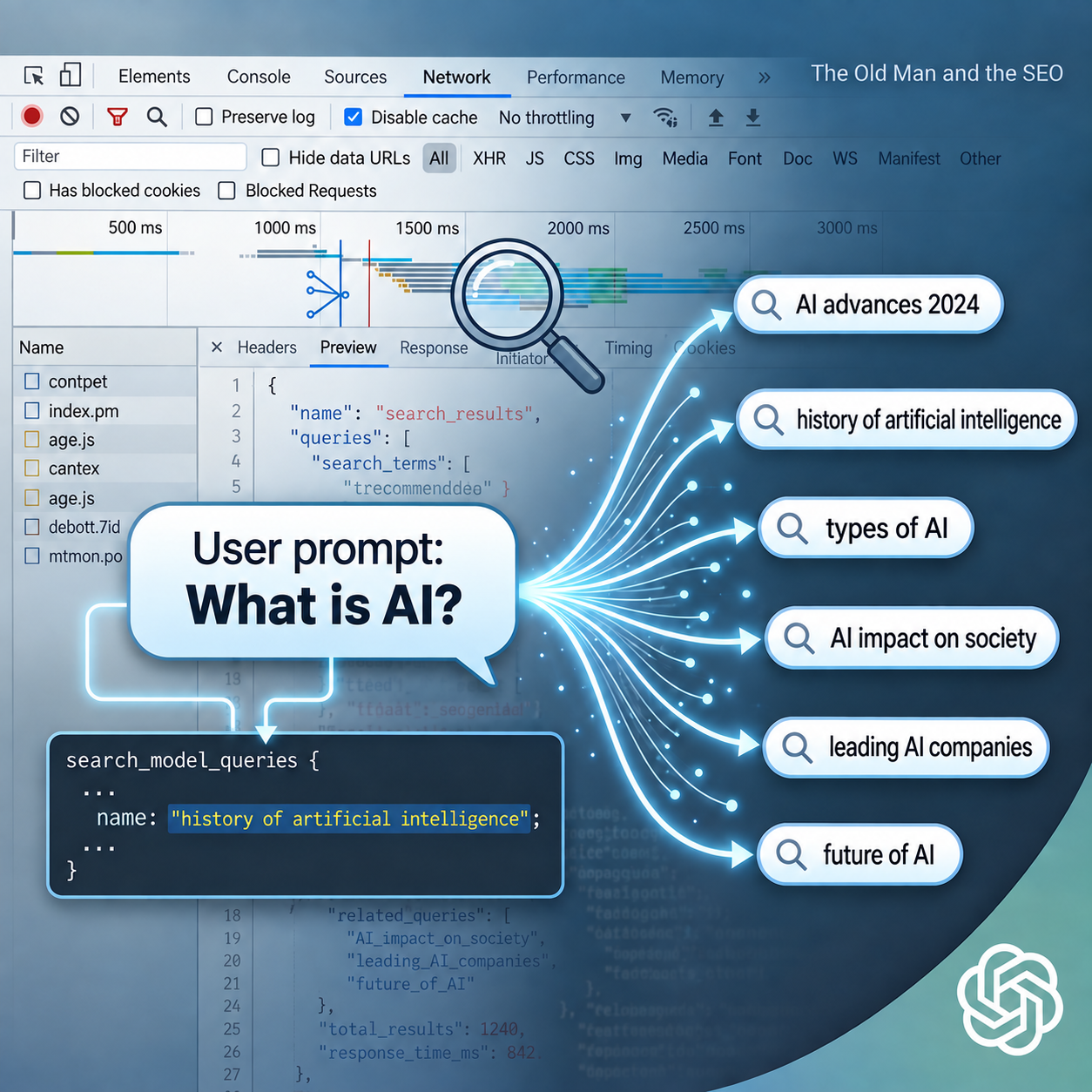
The integration of real-time search into Large Language Models (LLMs) has radically transformed the information retrieval ecosystem. For SEO Managers and marketing directors, understanding how platforms like ChatGPT interpret and execute web searches is now a critical skill. We are no longer competing only for static keywords, but for decomposed intent processed by artificial intelligence.
This technical guide explores the concept of Query Fan-out in depth, explains the methodology for auditing these hidden queries through reverse engineering, and proposes Generative Engine Optimization (GEO) strategies to maximize corporate visibility in the AI era.
What Is Query Fan-out?
Query Fan-out is the algorithmic process through which an AI model breaks down a complex or ambiguous user query into multiple specific, factual, and parallel search sub-queries.
Unlike traditional search engines that rely on string matching, Query Fan-out operates under a semantic reasoning paradigm. When a user enters a prompt in ChatGPT, the model does not search for that phrase literally. Instead, it:
- Interprets intent: Determines which factual data it needs to build a complete answer.
- Removes noise: Discards filler words and conversational rhetoric.
- Deploys search vectors: Generates and executes multiple searches simultaneously, each focused on different angles of the topic, such as prices, specifications, comparisons, or regulations.
Practical Fan-out Example
If a user asks: “Is it better to invest in property in Buenos Aires or Montevideo in 2026?”, the system does not perform that single search. The fan-out mechanism will internally generate an array of technical queries such as:
- “buenos aires real estate market returns 2026”
- “montevideo real estate investment roi analysis”
- “property tax comparison argentina vs uruguay”
SEO implication: If your content strategy only targets the user’s conversational long-tail keyword but ignores the technical and factual queries generated by the machine, your website will be excluded from the Retrieval process and will not be cited in the final answer.
Audit Methodology: How to See ChatGPT’s Hidden Queries
To visualize these queries, you do not need to rely on third-party tools. The data resides in the communication between the client — the browser — and OpenAI’s server. Below is the technical protocol for intercepting the search_model_queries JSON object using browser developer tools (DevTools).
Step 1: Set Up the Inspection Environment
It is essential to perform this process in a desktop environment such as Chrome or Edge, since mobile applications use certificate pinning, which makes inspection more difficult.
- Open ChatGPT.
- Right-click anywhere on the screen and select Inspect — or press F12.
- Go to the Network tab.
- Key Filter: In the Network panel search bar, type
conversation. This will isolate text requests and remove noise from images and telemetry scripts.
Step 2: Execute the Trigger
Enter a prompt that forces the model to search the web (Browse with Bing). Avoid logical questions; choose fresh data or market comparisons instead.
- Suggested prompt: “Analyze the performance of the MEP dollar vs. CCL over the last quarter and project trends for the end of the year.”
Step 3: Forensic Analysis of the JSON
Once ChatGPT begins generating the answer — you will see the “Searching the web” indicator — follow these steps in the Network panel:
- Select the filtered request, which generally begins with the conversation ID.
- Go to the Response or Preview sub-tab.
- Use the panel’s internal search function (Ctrl + F) to locate the key:
search_model_queries.
Updated Data Structure (2025–2026): OpenAI has optimized the data output. What used to be a complex nested object is now commonly presented as a flat array of strings. You will find something similar to:
"search_model_queries": [
  "cotizacion dolar mep ccl historico 2025 2026",
  "argentina financial market exchange rate forecast",
  "analisis brecha cambiaria argentina ultimo trimestre"
]
These text strings are the actual keywords your content needs to compete for. It is important to note that the model frequently translates intent into English to query higher-authority global sources, even when the original input was in Spanish.
GEO Strategy (Generative Engine Optimization)
Optimization for generative engines requires a shift in mindset: stop optimizing for the click and start optimizing for the citation. This new paradigm of SEO for LLMs requires our content to be designed to be ingested by machines, not just read by humans.
Based on the fan-out audit, these are the recommended tactical actions:
1. Atomization and Modular Structure
Fan-out analysis shows that AI searches for specific fragments of information. If the model deploys separate queries for “prices,” “risks,” and “benefits,” your content should reflect that modular structure.
- Action: Use semantic headings (H2, H3) that respond directly to the detected search vectors. Avoid dense paragraphs; make entity extraction easier.
2. Fact Density
LLMs prioritize truthfulness and authority. To be selected as a grounding source, your content needs to be rich in hard data.
- Action: Include comparison tables, exact figures, dates, and citations to primary sources. An article with a clear HTML table on “2026 Interest Rates” has a much better chance of being ingested and cited than an opinion-based piece.
3. Managing the Language Gap
Because fan-out often uses English for technical or B2B searches, Spanish-only websites may lose visibility.
- Action: You do not need to translate the entire website, but you should enrich it semantically. Include technical terms in English in parentheses or in meta attributes. This helps the model connect your local content with its internal global search.
Conclusion
Mastering Query Fan-out represents an asymmetric competitive advantage for the modern SEO Manager. While competitors remain obsessed with traditional search volumes, the ability to technically audit what AI is actually asking allows us to align our information architecture with the logic of the new answer engines.
The recommendation is clear: integrate this audit into your monthly processes, analyze the gaps between what the user asks and what the AI searches for, and optimize your content to become the unavoidable source of truth in your industry.

With a solid professional track record, Luciano has been SEO Manager at MD Marketing Digital since May 2018, where he leads a talented team, focusing on search engine optimization and the implementation of effective digital strategies.
Leave a Reply